
TL;DR: Posts that show how you think about clothes do more for your bookings than posts that show what you own. Seven formats below, each one worth running as a recurring series rather than a one-off, and none of them requiring you to mention where you take bookings until the last line.
Introduction
Most styling content gets judged on the outfit. The clothes are good, the photo is good, people like it, and nothing much happens after that.
The posts that lead to bookings tend to do something slightly different. They leave the reasoning in: why that shoe and not the other one, why that length works on that frame, why a trend that looks effortless on a runway is hard work in real life. Taste is what makes people follow you. Reasoning is what makes them trust you with a decision of their own.
None of the formats below are adverts, and none of them need to mention a platform or a price. They’re ways of making your thinking visible, so that when someone finally hits an outfit problem they can’t solve, you’re the person they think of.
If you want the wider view on how a service fits into your content, How to Promote Your Styling service covers that. This one is narrower: what to actually post.
What should a stylist post to get clients?
Post the decision, not just the result. An outfit photo shows taste, which is lovely but hard to buy. A line explaining why shows judgement, which is exactly what someone is paying for when they book a session.
A quick test for any post: could a follower repeat your reasoning to a friend? “She said to size up in a boxy blazer and keep the trouser narrow” is a transferable idea, and it travels with your name attached. “Nice coat” doesn’t.
The formats below all do the same job in different ways. Pick two or three rather than all seven, and run each one as a series: the same format, on the same day, often enough that people start expecting it.
What are good social media post ideas for stylists?
1. An “ask me anything” story series
A question sticker, the same slot each week, and a handful of proper answers. Not one-liners: take four or five questions and answer them the way you would for a paying client, with the reason attached.
It works because it’s the closest thing to a free sample of the actual work. Someone watching you solve a stranger’s trouser problem is watching you do the job. Save the best run to a highlight with a plain name like “Style questions” so it keeps working after 24 hours.
“Sunday style questions are open. Send me the outfit you keep getting stuck on.”
2. A tease of the work in progress
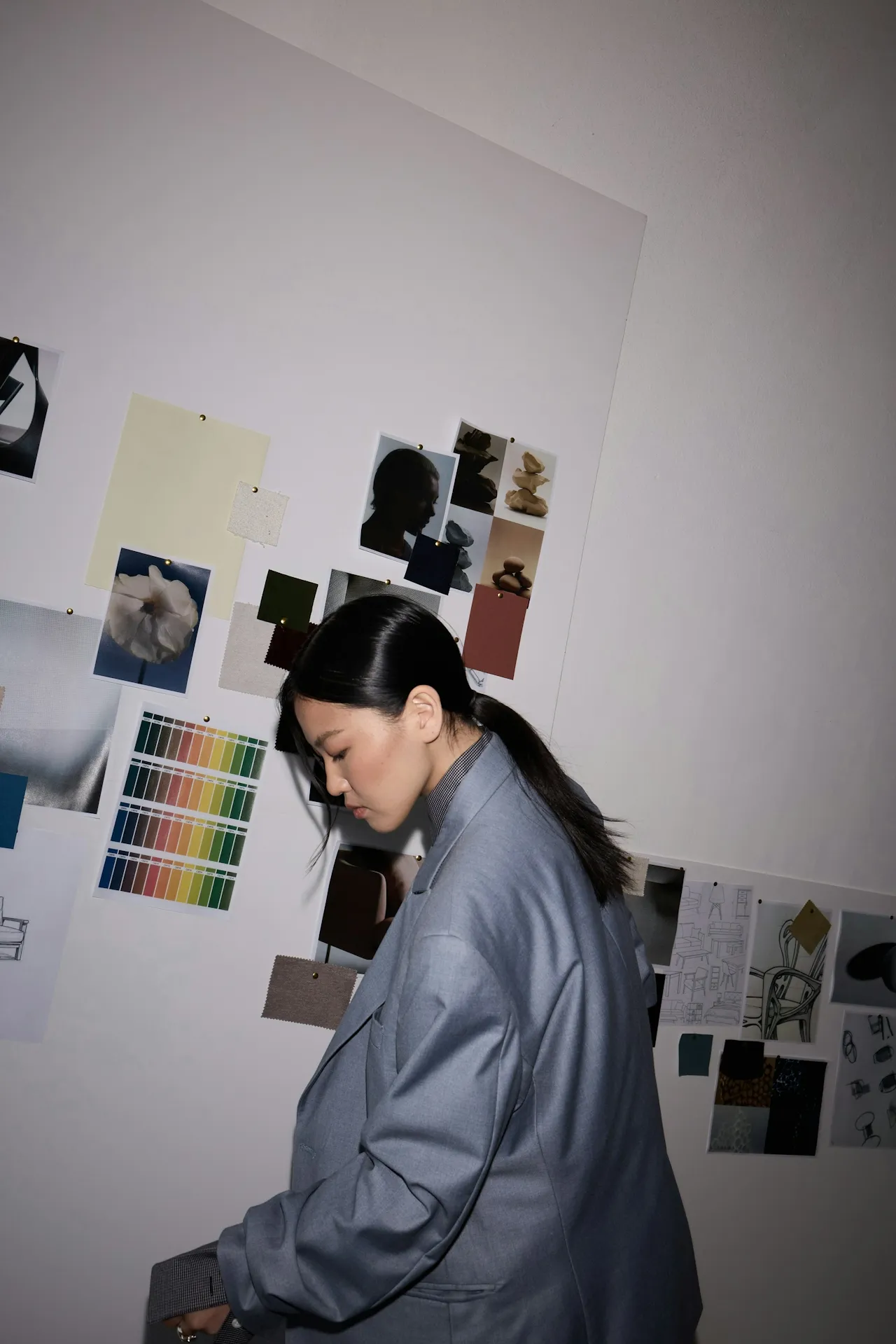
A rail being pulled together, a moodboard half built, six pairs of shoes on the floor while you decide. No client details and no big reveal, just the process happening.
Teasers do two things at once. They show that styling is work with a method behind it, and they quietly signal that other people are already booking you. A shot of a moodboard captioned “putting this together for someone’s holiday wardrobe” says more about your credentials than announcing that you’re available.
3. “What I’m wearing”, with a reason for every item
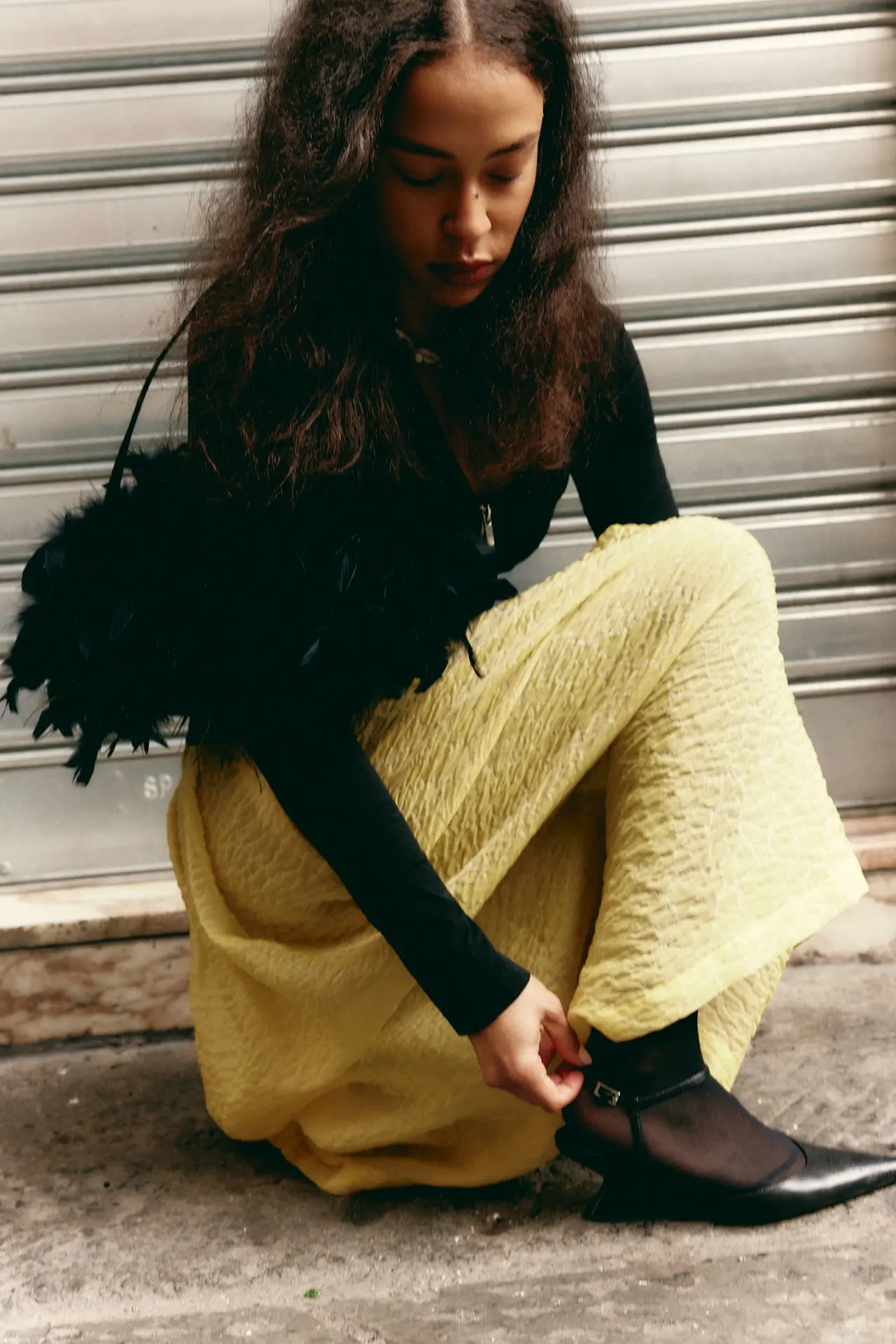
The standard outfit post, with one addition: every piece gets a line explaining why it’s there. Not where it’s from. Why it’s in the outfit.
- “Trousers a size up, so the drape does the work instead of the fit.”
- “Loafer rather than a trainer, because the hem is wide and needs something flat but sharp.”
- “One gold piece only. Everything else is doing enough already.”
Same photo, completely different post. People can copy an outfit from a normal “what I’m wearing”. From this one they can copy your judgement, which is what makes them want more of it.
4. A celebrity look, broken down
Take a look that’s already circulating and do the analysis nobody else is doing. What makes it work, what the stylist was solving for, and what the same idea looks like on a normal budget and a normal body.
The attention is already there, which is rare. What you add is the translation: “the reason this reads expensive is the colour match between the shoe and the bag, and you can do that with things you own.”
Be generous about other stylists’ work while you do it. Critique the choices, not the person wearing them.
5. A trend explainer that says who it actually suits
Pick one trend and give it a straight verdict. Where it came from, who it flatters, who will find it hard work, and what to reach for instead if it isn’t for them.
Most trend content is either breathless or dismissive, so a measured answer stands out. “This is great and it isn’t for everyone, here’s the version that is” is precisely the sort of thing people pay a stylist to tell them.
6. One item, three ways
Take a single piece most people already own, a white shirt, a denim maxi, a black blazer, and build three outfits from it for three different occasions.
This is the format that most closely matches what fans want from a session. Nobody books a stylist hoping to be told to replace their wardrobe. They book one to find out what their existing clothes can do, and showing that you work that way is a credential in itself.
It also numbers easily, which makes it a natural series: one item a week, and before long people are sending you the piece they want covered next.
7. A real dilemma, solved in public
Ask for a specific problem, something like “wedding in October and nothing works”, then solve one properly with permission: the options you considered, the reasoning, and a final call.
It’s the strongest proof you can post, because the outcome wasn’t staged. It also makes the path to working with you obvious without you having to name it. You’ve just shown what happens when somebody brings you a problem.
A few more to rotate in
A seasonal edit of ten pieces. A breakdown of something you got wrong and what you’d do now. A packing list for a real trip. A walk through the biggest gap in your own wardrobe. The common thread is the same in all of them: a reason attached to every choice.
How do you end a post without it feeling like a pitch?
The post has already done the work, so the closing line doesn’t need to persuade anyone. Someone who has just watched you solve four outfit problems needs an address, not an argument. Three places carry that address, and they work best together.
Your bio
Say that you style people, not just that there’s a link. A link on its own doesn’t tell anyone whether you take clients, and most people won’t tap something they haven’t been given a reason to tap.
“Stylist. One-to-one sessions and outfit help, booking below.”
“I help people get dressed. Wardrobe edits and occasion styling, link below.”
Your posts expire and your bio doesn’t. It’s what somebody reads when they land on your profile straight after watching a story, which is the moment they’re deciding whether you do this properly or just post about clothes.
The caption
One line at the end, in roughly the same words each time so it becomes familiar rather than an announcement.
“If you want this done properly for your own wardrobe, it’s the link in my bio.”
“I do this one-to-one as well. Link in bio if you’d like a session.”
“A few one-to-one spots open this month, link in bio.”
A pinned comment
On a reel, or on a post where the caption is already doing a lot, put the line in a comment and pin it instead. It sits at the top of the thread without interrupting the post, and it’s waiting there for the people who come to the comments to ask the question you were going to answer anyway.
“Getting a lot of questions on this one. I do it one-to-one too, link in my bio if you’d like help with yours.”
Wherever the mention sits, the link needs to land somewhere that can take a booking and a payment, rather than a page that asks people to message you and wait. That gap is where most interest quietly disappears.
If your service lives on MiM, that link is your studio: a fan lands on it, picks a service, pays, and the request arrives in your inbox. The Tools You Need to Run a Virtual Styling service compares the ways of setting that up, and what each one costs.
Should these be one-off posts or a series?
A series, wherever you can manage it. A single good breakdown shows that you styled one outfit well. The same breakdown arriving every Tuesday shows that you can do it on demand, which is closer to what somebody is buying when they book a session.
Four things turn a format into a series:
- Give it a name. “Sunday style questions”, “One item, three ways”, “Red carpet, broken down”. A name is what lets people ask you for the next one.
- Keep the slot. The same day, at roughly the same time, so it becomes something people look for rather than something they happen across.
- Keep the shape identical. Same opening frame, same order, same sign-off. The repetition is what makes a run of posts read as a series.
- Save it somewhere it lasts. Stories are gone in a day, so send each run to a highlight, and keep a pinned grid post or a playlist for the video formats.
A series also takes the weight out of the sign-off. By the fourth week, “link in my bio if you’d like this done for your own wardrobe” is simply how the post ends, and nobody reads it as an announcement.
On frequency, the ratio from How to Promote Your Styling service still holds: most of what you post is your usual content, and roughly one post in ten carries a mention of your service. One weekly series and the occasional breakdown sits comfortably inside that.
Frequently asked questions
What should a stylist post on Instagram to get clients?
Post the reasoning, not just the result. An outfit photo shows taste; a line explaining why that shoe, that length and that colour shows judgement, and judgement is the thing people pay for. The formats that do this well are an ask me anything story series, a tease of work in progress, itemised outfit breakdowns, a celebrity look broken down, a trend explainer with a clear verdict, one item styled three ways, and a follower’s real dilemma solved in public.
How do I show styling credentials without famous clients?
Credentials are demonstrated far more often than they’re listed. Solving a stranger’s outfit problem in a story, explaining why a trend suits some people and not others, or building three outfits from one item all show the same thing a client list would: that you can make a good decision and explain it clearly. Most fans are choosing a stylist on whether the reasoning sounds right to them, not on who else has booked you.
Should styling content be a one-off post or a series?
A series, wherever you can manage it. A single good breakdown shows that you styled one outfit well; the same breakdown arriving every Tuesday shows that you can do it on demand, which is closer to what somebody is buying when they book a session. Four things turn a format into a series: give it a name, keep the same slot each week, keep the shape of the post identical, and save it somewhere it lasts, such as a story highlight or a pinned grid post. It also takes the weight out of the sign-off, because by the fourth week the line pointing at your bio is simply how the post ends.
Where should I mention that I take styling clients?
In three places, and they work best together. Your bio should say that you style people rather than just holding a link, because a link on its own doesn’t tell anyone you take clients. Captions carry one line at the end, in roughly the same words each time. And on a reel, or where the caption is already doing a lot, a pinned comment does the same job without interrupting the post. Wherever it sits, the link needs to land somewhere that can take a booking and a payment, rather than a page that asks people to message you and wait.
Where this fits
This article sits alongside the rest of the first-service guides:
- Promote naturally: How to Promote Your Styling service
- Shape your service: Stuck on Your First service?
- Price your offer: How to Price Your Styling service
- Audience size: You Don’t Need 100k Followers to Get Paid for Styling
- Set up the link in your bio: The Tools You Need to Run a Virtual Styling service
Final thought
None of this asks for a new content strategy. It’s the posts you already make, with the reasoning left in, and one line at the end telling people where to go.
Do that consistently and the credentials look after themselves. People don’t book a stylist because they saw a good outfit. They book one because they’ve watched somebody make good decisions, over and over, and would quite like a few made on their behalf.